DIY Body Scrub: The Easiest Low-waste Gift of the Season

Our pantry staples are for more than just the pantry!

If you’ve never used one before, a body scrub is simply a gentle exfoliator and usually a mix of something coarse (like sugar, salt, or even coffee grounds), oils (like olive, jojoba, coconut), and skin-soothing add-ins (like honey) that buff away dry skin and leave everything soft, smooth, and hydrated.

And with just a few ingredients, a glass jar, and five minutes, you can make this low-waste gift that looks beautiful, smells dreamy, and has that ‘homemade’ charm.

DIY body scrubs check every box:

✔️ Affordable
✔️ Low-waste
✔️ Nourishing
✔️ Customizable
✔️ Consumable

Why they’re great:

A homemade gift is nearly always more special than a store-bought one, and when it comes to beauty products, the people in your life will appreciate knowing exactly what’s going on their body. These scrubs are made with simple, whole ingredients, and customized with any essential oil they may prefer.

Plus:

  • They repurpose what you already have. An old jam jar, pasta sauce jars, spice jars.. can all be cleaned up and transformed into gorgeous packaging.
  • They aren’t clutter. It’s gifting that doesn’t create more ‘stuff’. The consumables inside are enjoyed, used up, and the jar can be reused all year long.
  • They’re personal. Customize with their favorite scent, decorate the jar, write a note including instructions on how to get the most out of your scrub.
Who they’re for:

Think of them as a little spa day in a jar. Literally anyone. People who shave, get dry skin, garden, or just enjoy a little pampering. People who are hard to shop for. People who “don’t want anything”. You can make a whole batch, portion them into smaller jars (we recommend trying to source wide mouth and shallow jars), tie on a ribbon, add a handwritten tag, and you’ve got a thoughtful gift for friends, teachers, neighbors, coworkers, or as a stocking stuffer!

DIY Peppermint Sugar Scrub

Fresh & Festive

Ingredients:
✨ 1 cup (8 oz) raw demerara sugar
✨ 2 tablespoons (1 oz) olive oil
✨ 2 tablespoons (2 oz) honey
✨ 3-6 drops of peppermint essential oil

Instructions:

FOR MAKING:

  1. Combine ingredients in a glass or metal bowl (not the container you intend to give away).
  2. Mix thoroughly, adding the essential oils in gradually to avoid overdoing it.
  3. Scoop into a wide-mouth jar. (Tip: this recipe can be portioned into many smaller jars to create great stocking stuffers: lip scrubs!)
  4. Dress up with a festive ribbon and label.
  5. Optional: include a card or tag with the following instructions.

FOR ENJOYING:

  1. Use before washing or shaving.
  2. Message gently on wet or dry skin.
  3. Wash off, or rinse off with warm water and a washcloth for an extra moisturizing effect.
  4. Can also be used as a lip scrub.

DIY Calming Sugar Scrub

Gentle & Soothing

Ingredients
✨ 3/4 cup (2 oz) quick oats
✨ 1/4 cup (2 oz) raw demerara sugar
✨ 4 tablespoons (2 oz) coconut oil
✨ 2 tablespoons (1 oz) olive oil

Tip: more oats = more soothing, more sugar = more exfoliating

Instructions:

FOR MAKING:

  1. Optional: blend oats in a blender or food processor to achieve a finer scrub
  2. Soften coconut oil in microwave for about 10-15 seconds
  3. Combine ingredients in a glass or metal bowl (not the container you intend to give away)
  4. Mix thoroughly
  5. Scoop into a wide-mouth jar
  6. Dress up with a beautiful ribbon and label
  7. Optional: include a card or tag with the following instructions

FOR ENJOYING:

  1. Use before washing or shaving.
  2. Message gently on wet or dry skin.
  3. Wash off, or rinse off with warm water and a washcloth for an extra moisturizing effect.

Homemade sugar scrubs are simple, thoughtful, affordable, and truly low-waste. They are a consumable gift that gets used up, not stuck in a drawer or on a shelf collecting dust, eventually headed for the landfill. Whether you’re making a single jar for someone special or a whole batch to give out to the whole team, it’s a sweet way to give something that feels luxurious without all the plastic and mystery ingredients.

If you need jars, ingredients, or a little help getting started, we’ve got it all right here at Life Unplastic. Happy homemade gifting! 🎁

Composting: A Quick and Dirty Guide

Just a heads up that we also have a longer, more detailed composting guide called Composting 101 that you can find here. In it we dive deeper into why landfills create methane, the EPA’s Food Recovery Hierarchy, and other details. This quick-and-dirty guide, on the other hand, is meant to be the “just tell me what to do” breakdown for getting started without overwhelm. Now let’s dig in!

Composting is good for the planet.

In a landfill, compostable organic waste quickly stops breaking down efficiently and starts releasing methane gas into our atmosphere. Properly caring for the same compostable organic waste at home does a lot to reduce emissions, and provides rich, nutritious material for your garden.

But simply putting your scraps in a pile doesn’t do much — there are techniques to composting that will keep your pile breaking down smoothly. Don’t worry though! It’s easy once you have the basics down.

Side note: Not all people are able to keep a compost pile at home, or you may not have a garden to use your compost in once it turns back into soil. Gainesville is a great place for composters like this, because of our local (self-proclaimed) ‘stanky-boys’ over at Beaten Path Compost, an organization that offers affordable compost pick ups and drop offs in the area. If you’re not sure how to fit composting into your lifestyle, but don’t want to send food waste to the landfill, we definitely recommend checking their services out.

Psst: If you prefer a print format, or want to gift this information (& far more!) to a curious friend, consider a Home Composting Made Easy ‘zine!

Starting Your Pile

If you have the space and resources to have your own backyard compost pile, there are a few different ways you can go about it.

Your first decision is going to be whether or not to have your compost touching the ground or in an above-ground container like a tumbler.

Tumblers make it easier to turn your pile, which is necessary to maintain proper aeration and prevent anaerobic decomposition, which releases methane gas. You can buy a simple compost tumbler, or make your own. If you keep your pile on the ground, you can also turn a pile by mixing it up with a pitchfork, or by shoveling it all onto a tarp and then dumping it back onto the ground.

This trash can has holes poked in it and is sunk into the ground to make a easy DIY compost receptacle.

Piles that are connected to the earth allow microorganisms, insects, and worms to help with the process. It’s a great way to give back directly to your own backyard ecosystem! These piles still need to be turned and maintained, though, so try to not just forget about them.

Here’s an extra tip: if you have an above-ground container, you may be tempted to try and replicate that microorganism heaven, but resist the urge to add worms to your tumbler. Compost gets pretty hot when it’s breaking down, and the enclosed space could easily become a death trap for little crawlies when they can’t access fresh, cool air.

Compost bins take many forms and sizes, and many are very easy to make yourself, with anything from a small wire trash can from an office supplies store to chicken wire and lumber. Check out one simple DIY here.

What to Compost

Now that you have a receptacle, you need to know what to put in it. All compost piles have browns and greens. In general, you want to have more browns than greens. A good starting ratio is 3 parts brown to 1 part green.

Browns are generally dry plant-based material, like dead leaves, shredded paper, and cardboard pieces. Browns are carbon-rich.

Greens are usually what goes in your countertop compost bin — things like veggie scraps, fruit peels, tea leaves, eggshells, and coffee grounds. This can also include grass clippings* and manure**. Greens are nitrogen-rich.

*Avoid adding grass or yard clippings treated with pesticides or herbicides, and skip any diseased plants as they can transfer contaminants or pathogens to your finished compost.
**Avoid pet and human waste as they can carry pathogens that home compost can’t reliably neutralize.

If your pile is moist, and smells rich and alive, that’s good! If it’s wet and smells rank or overpowering, you could probably benefit from a little more browns.

It’s also always a good idea to get your material as small as possible before mixing it into your pile, so it breaks down faster once it’s there. Think about it like chewing your food before digesting it. This means shredding paper, crushing eggshells, ripping up cardboard, etc.

What NOT to Compost

Certain materials may seem natural enough to compost, but if you add them to your backyard pile, they’ll attract animals, stink up your yard, or they won’t break down properly.

Pet or human waste, even used natural toilet paper or compostable litter, will make your compost unsuitable for the growth of any edible plants, not to mention have very detectable odors that will attract animals. Only use materials like this if you are an experienced composter who can be absolutely certain that your final product will not be used to grow anything that will be eaten.

Materials like tea bags, coffee pods, and “compostable” cutlery, trash bags, or other household items often need to be sent to a commercial facility. Backyard compost piles just don’t get to the temperatures needed to break down compostable plastics or treated wood. Greenwashing is also rampant when it comes to disposable items made of “compostable” plastic, so it’s generally a safe bet to avoid tossing those into your home compost.

If you’ve got the guts to start adding more materials to your home compost, like meat, oils, bones, etc (again, not recommended for beginners!) try out these compost microbes from Kenkashi, which boast a two week time frame from countertop to usable soil! They’re also helpful for any compost pile that could use some speeding up or some extra help.

Maintenance

It’s a good rule of thumb to turn your pile once or twice a week. As you continue composting, you’ll learn more about how quickly your particular ingredients, environment, and container work, and you’ll get into the swing of turning your pile whenever it needs more oxygen.

A healthy pile is moist, earthy-smelling, and can reach temperatures of around 130 to 160 degrees Fahrenheit in the center, which is quite warm, but normal and part of the process.

If your pile is too dry, add some water and turn it over a few times.

If your pile is too stinky or wet, add brown materials and mix them in. You can also spread your pile out on a tarp in the sun for a few minutes if you are dealing with a lot of excess water.

If your pile isn’t getting hot, add more greens and mix them in.

Harvesting

A well-mixed and well-maintained pile should be finished in about 3-6 months. Left to rot, a pile may take a year or more to turn into usable soil.

You will be able to tell that your compost is done when there are no visible scraps and it looks dark, loose, and crumbly, like soil. It also will no longer heat up while mixing. Check out this blog post for more tips on how to tell when your compost is finished breaking down.

Once you’ve determined that your compost is ready, leave it to rest and cure for at least 4 weeks. While the finished batch is curing, you can add the newest material to a new pile or just take a break. Don’t be alarmed when you come back to it — it’s supposed to shrink to about a third of its size!

Sift your compost to remove items like twigs or produce stickers you forgot to remove, and then enjoy the rich, fertile, product of your labors. Isn’t it just amazing to see that process to completion?

Sources and Resources

EPA: Composting at Home

ask ifas: Compost Tips for the Home Gardener

Compost Magazine: How to Build an Emergency Wire Compost Bin in 15 Minutes or Less

Gardening Know How: How To Know When Compost Is Ready: Key Signs Your Homemade Garden Gold Is Finished

Beaten Path Compost: Sign Up Today!


We posted a graphic form of this blog on our Instagram! Be sure to follow us there for more quick tips and infographics 💚🌎

The Refill Revolution

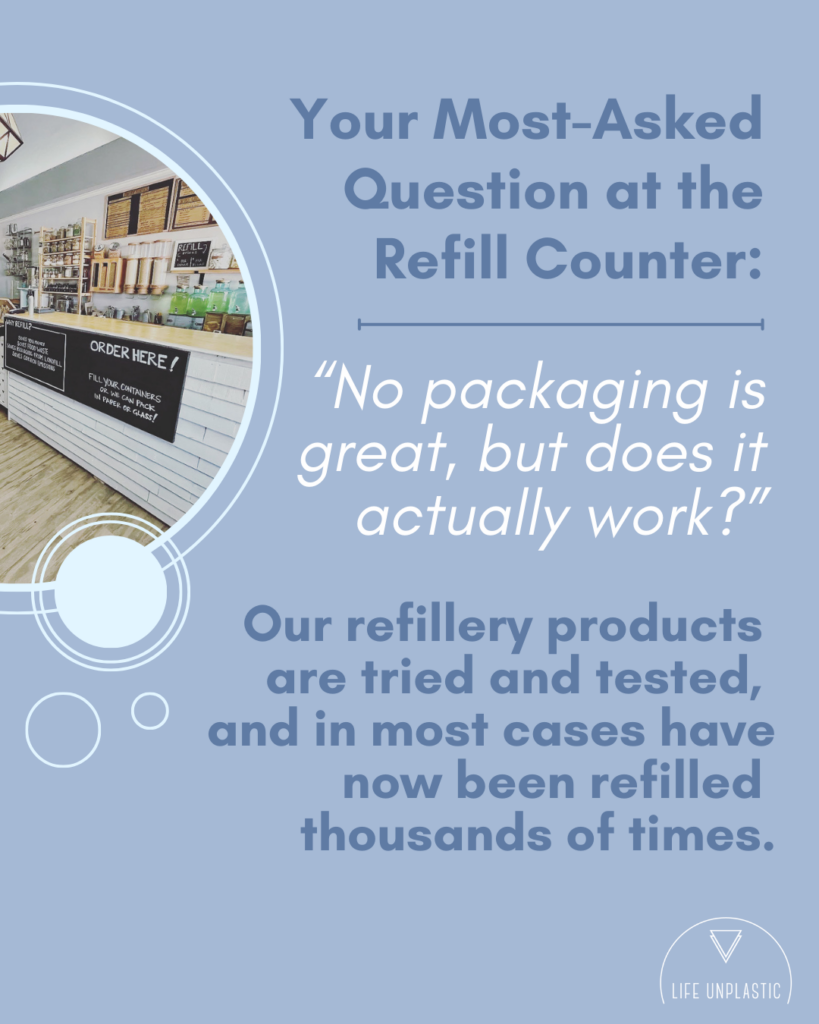
Being located in a college town means a portion of our customers are only here in Gainesville for a short time before heading off to conquer the world. Plus, just the general comings and goings means we get the question all the time: “Are there more Life Unplastics? Is there something like this in [insert town here]?”

We’re pretty confident there aren’t any other Life Unplastics, but there ARE similar low-waste businesses (aka zero waste shops and/or refilleries) that offer a different (and better!) way to consume your groceries and home goods. Actually, there are lots more across the United States with new ones opening all the time. You could say we’re in the midst of a kind of Refill Revolution, as more and more entrepreneurs get inspired to bring their version of a sustainable business model to their communities.

Refillery – A place where people can get their own containers refilled with household products and pantry staples in bulk, using a pay-by-weight system

The first true refillery in the USA was established in 2012, but the movement can be traced back to France in the early 2000s. The movement has only been growing since, and there is now estimated to be over 600 refilleries and bulk shops in the US, ranging from ‘self-service’ shops where you weigh and refill your own container to ‘full-service’ bulk bars (like ours!).

There are mobile refilleries that act almost like food trucks, some that have little cafes inside, some that sell only locally-produced small-batch products, and chains that have locations in multiple cities or states.

When arranging priorities, some focus solely on providing an eco-friendly option to the locals around them, zooming in on the community they can have the biggest impact on. Others go for across-the-board change by advocating for widespread lifestyle changes and environmental activism.

All are important for the zero-waste cause, and yet there are other reasons to refill as well!

Why Refill?

The pay-by-weight model has been around for ages, offering certain benefits that individually pre-packaged goods can’t provide. And modern eco-friendly refilleries only add to the list of reasons to refill:

  • You can customize the amount to your needs or budget – or both!
    When you’re paying by weight, you only pay for what is put inside your container. Which means you can get a few ounces of any product, as opposed to committing to the big jugs in a conventional grocery store. You can also make a few dollars stretch and pick up several different ingredients for an easy, nutritious dinner at a surprisingly low cost, compared to if you had to buy each ingredient in it’s pre-packed grocery store counterpart.
  • Reduce the amount of single-use plastic you throw away
    Of course, one of our main missions at Life Unplastic is to help you eliminate plastic, but all refilleries have a natural way of reducing single-use packaging by letting you refill the same container multiple times. At LU, we’ll happily refill your plastic bottles (no shame here!), which keeps them in the usage loop and out of the landfill.
  • Reduce the amount of single-use plastic WE throw away
    Refilleries often partner with their suppliers to make transactions more closed-loop. For example, we always make sure to give the empty buckets back to Resident Coffee when we get our delivery of freshly roasted beans, so they can take the containers back and fill them again. Just getting bulk products cuts down on packaging, and local bulk products are even better for the lack of shipping required!
  • Know exactly what you’re getting
    Packaging at the supermarket is made to grab your attention, maybe more than it’s made to actually provide information. Not only do you not pay for the advertising when you buy bulk refills, but you also don’t have to grapple with flashy buzzwords or greenwashing. Eco-conscious refilleries also tend to opt for clean, non-toxic, even single-ingredient formulas that exclude fragrances or other hidden ingredients.
  • Reduce your cognitive load
    Speaking of greenwashing, we battle that monster for you. All of our products are vetted to ensure that you’re getting high quality, clean, sustainable products from companies that are transparent and ambitious about their sustainability. We also curate a menu that pares down each category to our absolute favorites, so you have the freedom to choose without getting stuck in decision paralysis.
  • Slow down!
    It doesn’t add much time, but bringing your own containers certainly adds at least a small level of intention to what could otherwise become a mindless, consumerist chore. Many refilleries also boast a warm, local vibe that you can’t find at big box stores, and that extra human interaction may add a little time to your grocery shopping, but it also adds a lot of warmth to your day in an era of increasing isolation.

So How Do You Find More Refilleries?

There are a number of databases to help you find refilleries across the USA. Litterless breaks it down by state and city, and includes other zero-waste shops as well, Refill Directory is another list-format database that focuses on refilleries alone. For a map view, try scanning Dawna Mirante’s google maps guide. We’re proud to be featured among other change-makers on these lists!

If you see a blank spot on the map, and you feel so driven, consider opening your own refillery! You’d be filling a hole in a local economy, championing the environment, and joining a network of inspired entrepreneurs that come from a world of different backgrounds.

If you’re not the business-y type, but still want to learn more about the movement, we recommend reading these articles:
https://tastecooking.com/the-refillery-is-coming-for-your-grocery-store-routine/
https://wastingwell.wordpress.com/2024/12/17/the-scoop-on-refilleries/#_edn5
https://www.greenwashingindex.com/refillery-revolution/

Thank you for staying informed, for supporting environmental movements, and for eco-chatting with us!