
Welcome to Plastic Free July, 2026!
We’re excited to celebrate low-waste lifestyles and to challenge Gainesville (and beyond) to “unplastic” your daily routines more than ever before, even if just for this month.
We love to think about these challenges as an experiment (read more about that here and here), so we invite you to try out whatever tips you’re curious about. Worst case, you learn something new… best case, you find a new habit that makes your life more sustainable.
This week, we’re bringing you tips and tricks specific to cleaning. In this blog post, learn just a few of the many ways to use cleaning vinegar around your home, what proper sponge care looks like, plus a couple of our very favorite unplastic cleaning staples.
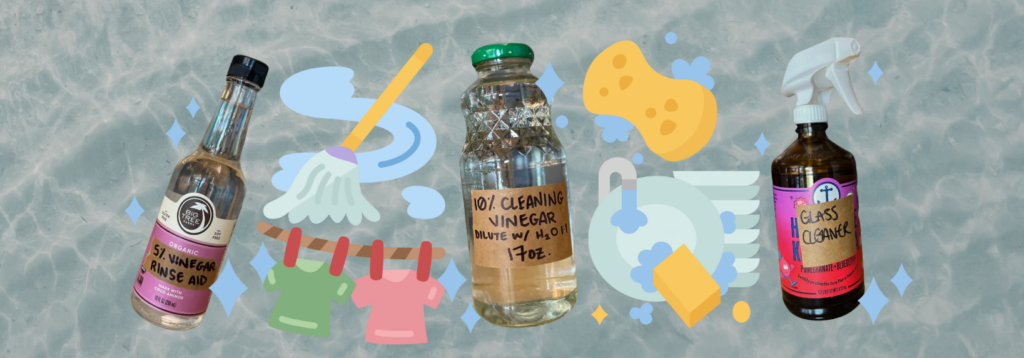
Use White Vinegar Just About Everywhere!
White vinegar is non-toxic and biodegradable, unlike many store-bought cleaning products that have artificial colors, fragrances, and harmful chemicals. If you buy your cleaning vinegar from Life Unplastic or similar refilleries, you can even skip the plastic packaging, and buy just the amount you need. Save money, save the planet.
One caveat:
Our white *cleaning* vinegar is concentrated and 10% acidity, about 2x as strong as standard white vinegar (4-6%).
For most everyday cleaning, dilute it with 1-3 parts water to 1 part vinegar.
For tougher jobs, use less water – or even full strength.
1. Glass cleaner
We use it in the shop every single day: glass cleaner made with two simple, cheap, readily available ingredients. Using equal parts, mix 10% vinegar and water and spray it on glass, ceramic, or stainless steel. Wipe off with a lint-free cloth. We find that it dries crystal clear and fragrance-free, but if you have issues with lingering streaks or smell, you can try adding a splash of isopropyl alcohol to the mixture.
2. Floor Cleaner
Another LU-certified use for cleaning vinegar. If making a gallon of mop water, use 1/2-1 cup of 10% vinegar or 1-2 cup of diluted vinegar. If adding to a spray mop reservoir, use about a 1:10 ratio to water if using the 10% vinegar. If it’s too strong, add more water. The vinegar smell will dissipate as it dries, leaving you with sparkling floors.
3. Laundry Booster
If your pets are particularly messy, you have stubborn grease stains, or your whites have gotten dull with time, vinegar can fix that. Add up to 1 cup of diluted (4-6%) vinegar to a load, run on hot, and experience fresh, bright clothes.
4. Dishwasher Rinse Aid
Gainesville is known to have pretty hard water, which can leave spots on your dishes, even after they’ve been cleaned. To fix this, just fill a small bowl with cleaning vinegar, place on the top rack of the dishwasher, and run as normal. If you’re out of space on the top rack, you can also add a bit to the “rinse aid” compartment, but avoid doing this too often, and always dilute first, because concentrated vinegar can corrode the parts of your dishwasher.
5. Mold Killer
Areas like bathrooms, garages, laundry rooms, and kitchens are bound to get some mold and mildew occasionally, especially in Floridian humidity. While large areas should be dealt with by a professional, small patches of mold and mildew can be eliminated with a spritz of cleaning vinegar and a coarse brush soaked in warm water. This method isn’t effective on wood, and may damage stone, grout, or marble, so exercise caution.
6. Drain Maintenance
Drain clogs are usually simple build-ups of hair, dirt, soap, or food. These clogs can be loosened by pouring undiluted cleaning vinegar down the effected drain, waiting for the liquid to filter through and work its magic, then running hot water. If the problem persists, try starting the process with baking soda, then following with vinegar and hot water.
Take Care of Your Sponges
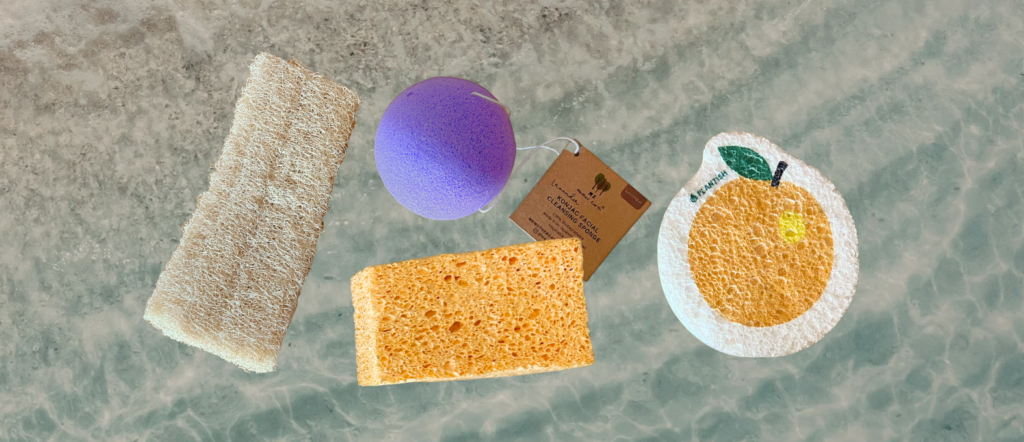
If you’re opting for less plastic, you can certainly try skipping plastic or polyester scouring pads, shower poufs, sponges, and scrub brushes (scroll down for some natural alternatives). But whether you’re choosing a plastic scrubby or a natural one, a surefire way to reduce your waste is to replace it less often. There are a few simple steps to caring for your sponge (or pouf, or brush) to make it last as long as possible, so you don’t need to toss it and get a new one every few weeks.
1. Rinse after each use
Soap and grime can quickly build up on a well-loved sponge. Make sure to rinse with water when you’re finished, so all that gunk doesn’t sit in your sponge overnight and weaken the fibers or cause it to stink.
2. Leave out to dry completely
Mold loves a wet, soaked sponge! Not to mention the stress that being constantly wet puts on any connecting stitches or bits in sponges and brushes. Hanging loops are very convenient for letting your sponge dry out, but you can also use a soap dish or store it in your dish drying rack. Be sure to store it bristles down, so the water isn’t dripping onto the wood.
3. Disinfect regularly
Natural-fiber sponges and brushes are often best disinfected with a simple dunk in cleaning vinegar (a truly multi-talented cleaning agent!), but you can also boil or microwave a soaked sponge to kill bacteria. You can even put some options in the dishwasher or washing machine to really refresh them.
Some of Our Favorite Plastic-Free Alternatives
If and when it’s time to replace something, these are a few of our favorite low-waste cleaning swaps. They’re durable, effective, and designed to help you buy less over time – not more.
Remember: you don’t need to replace everything at once. Use what you have, take good care of it, and when it’s time for something new, consider choosing an option that’s designed to last, good for you, and good for the planet.
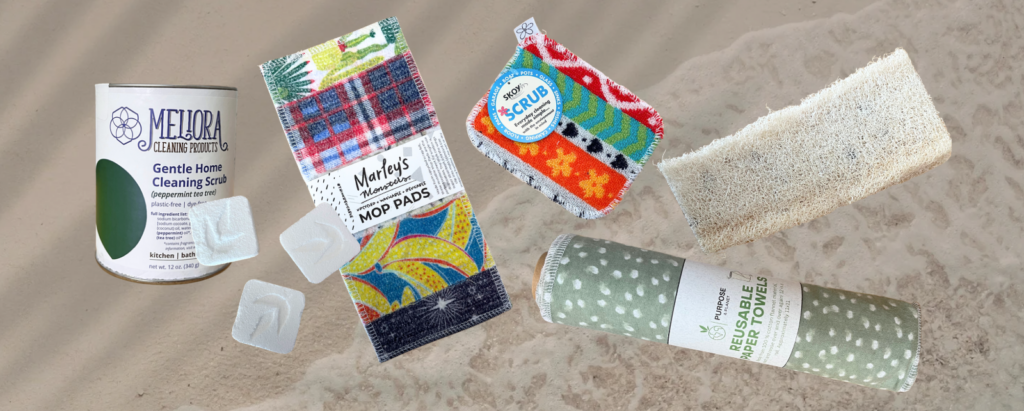
Meliora Gentle Home Cleaning Scrub
We love Meliora products because they prove simple ingredients really work. This gentle cleaning powder tackles metal, ceramic, porcelain, and tile using just three ingredients (baking soda, vegetable soap, and essential oils) with great results. Available in bulk or in refillable carboard/metal containers.
Skoy Scrub Scouring Pad
This tenacious scrubby made from recycled materials pairs great with the cleaning scrub mentioned above. Made in Sweden, skoy scrubs are woven from the tiny cotton fibers left behind when manufacturing towels, and coated in a plant-based plastic alternative to add some extra abrasion. The skoy scrub softens when wet, so it becomes flexible enough to contour into nooks and crannies of dishes, counters, showers, tubs, car interiors, you name it!
Natural Loofah Sponge
For other scrubbing needs that perhaps require a gentler hand, try a real dried loofah. This natural sponge is simply a dried out loofah plant, with the seeds still inside so you can grow your own if you wanted! Each stalk we sell can be cut into smaller pieces (we usually get about 4 or 5 from each one) and used to scrub dishes, your body, your face, or surfaces that are more prone to scratches, like wood and stone. They expand drastically in water, and soften to a cushy texture that feels nice to hold while helping you remove gunk and grime from a variety of materials.
Scrap Felt Mop Pads
Unlike those single-use, pre-soaked, plastic mop pads that come in big plastic tubs, these cotton pads are durable, washable, and reusable (and much cuter!). Because of the flaps on either side, you can attach them to your Swiffer mop handles just like you would with the single-use ones. Then simply spray your floors or the mop pads with cleaning solution (like the vinegar one discussed above) and get to work. When you’re done, just remove the mop pad and throw in the laundry. These, like the reusable paper towels below, are a bit of an upfront investment. But overtime you will save tons of money when you quit buying disposables.
Reusable “Paper” Towels
Paper towels are extremely convenient. The size, the roll, the fact that you don’t need to soil a whole towel when cleaning up a wet mess… But you can actually get all of this convenience without the bleached, plastic-wrapped waste. If you want an aesthetic and hardworking reusable alternative, these might be perfect for you! The flannel even magically clings to itself so they can be rolled up and stored on the paper towel holder you already have. When they’re dirty, simply throw them in the washing machine with your other laundry.
Toilet Cleaning Bombs
Many toilet cleaners rely on harsh chemicals that aren’t necessary for routine cleaning. These fizzing tablets dissolve quickly in water, loosening gunk freshening with tea tree, peppermint, and lemon essential oils. Drop one in the bowl, let it fizz, scrub, and flush.
We also have cleaning supplies by the ounce in our refillery, as well as sponges, brushes, soap bars, and more! Check out all our Cleaning Supplies here.