A Resolution Revolution

Alright, I’m just gonna come right out and say it: New Year’s resolutions aren’t for me. 

I’m a list person. Lists all day, every day. Writing down and/or vocalizing our goals are a wonderful way to find focus and commitment in any aspect of life. But I have never been able to properly manage a first of the year, sweeping lifestyle change or “resolution”, with any kind of permanent results. 

I have always had a lot more success implementing small changes that over time led to a shift in my consumer mindset. Lasting lifestyle change has been the result and not the goal, if that makes sense. 

That being said, here’s a way (well, many small ways) for you to become a more eco-friendly version of yourself in 2022 without making traditional New Year’s resolutions that don’t stick. 

The 2022 Eco Mini-Challenges

Alright, so how this works is – instead of one never-ending, perfect or perish resolution – challenge yourself (sounds fun, right?) to focus on various aspects of a sustainable lifestyle each month, and see where you can (and you will!) make improvements. 

Even if you don’t stick with each one, you’ll get a taste for different eco-friendly solutions and a feel for what fits with you.

You don’t have to follow the order presented here and if you don’t get to all of them, that’s ok too. Just pick a few that seem like a good place to start and jot one at the top of your calendar each month.


1.
Track Your Trash

A great way to get clear on where you can individually make the most impact and send less to the landfill is to conduct a waste audit.
Know your trash, then reduce it. 

What’s a waste audit

It’s pretty much exactly what it sounds like. You’ll be able to see the big picture of what you’re throwing away for the month (or even just a week!). 

Once you’ve tallied up all your trash, look for what items have the most marks. Those are likely the most impactful places where you could start looking for eco-friendly alternatives.

There’s two easy ways to do this: 

      1. Before you take the trash out to the curb, dump it all out and tally up what’s there. This is a lot more pleasant process if you’re composting your food scraps separately
      2. Keep a piece of paper by the trash can and write it down as it goes in. 

Zero Waste Gainesville has these resources to help, including detailed instructions and a printable table. Or check out this cute video below:


Betsy and her sidekick, Georgia, will show you how to perform a home waste audit to help you begin your zero waste lifestyle. A waste audit helps you learn what you are throwing away so you can begin making different choices to avoid items that create waste.

Bets on the Planet is a show made by kids for kids to help them live a sustainable life that is good for the Earth.


2.
Practice Mindful Shopping 

All you need is less text.

The most sustainable product is the one you don’t buy, but it’s so easy to casually shop when products are being waved in our faces 24/7.  

The challenge here is to pause when you pull out your credit card this month. Ask yourself –

Do I really need it?

Will I use it more than once?

Is there a way to get it package free, packaged in, or made from compostable materials?

If the answer is *no* to one or more, just don’t buy it.

Admittedly, this can be tough! Our minds are programmed to get excited about novelty and that boost of serotonin when we buy or gift something is :chef’s kiss:. I will say, there is also a lot of empowerment in successfully saying NO to the barrage of tailored advertisements, so I encourage you to give it a shot.

bubbles in hands above a bathtub filling with water
Photo by Sora Shimazaki from Pexels

Ultimately, retraining our thought processes around consumerism shouldn’t feel like restraint or punishment, so feel free to reward yourself in some way whenever you pass on a purchase. It takes a lot of mindful acknowledgment to celebrate not buying something.

Rewards can be anything from relaxing in a bubble bath, to borrowing a new book from the library, or taking a fun fitness class. 


Reducing our consumption is one of the most powerful ways we can be environmentally friendly, because so many resources are invested into making new things. Alternatively, you could seek out an eco-friendly alternative, try to borrow it from a friend, make it yourself, or even look for a used one.

Bonus: a very real world benefit from mindful shopping is saving money! All those little (and big) impulse buys in a month can really add up. You’ll see!

my buy nothing month: what i learned when i stopped shopping
find your neighborhood ‘buy nothing’ group or learn how to start one. Declutter your spaces and give where you live

3.
Compost Your Food Waste 

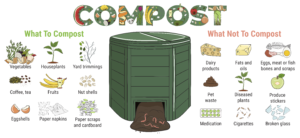
What to Compost

I can’t express enough how important and impactful it is to compost your food waste, no matter your situation. You can contribute directly to a circular economy in a profound way. Not only does food that has been landfilled produce methane, a green house gas contributor, but also it is a missed opportunity to convert those scraps back into rich soil that can be used… to grow more food! 

But, before we talk about how to compost, let me back up for a second. Depending on how much food you’re currently chucking every week, you may benefit greatly from taking a few days this month to peruse the websites and social media feeds of people like Anne-Marie Bonneau, Zero Waste Chef. 

She will show you how to get the most bang for your buck, with regard to food, food waste, and finding the value in what we may generally consider scraps. It’s inspiring, I love her work!

Now to come back to composting the scraps that are left. From back yard piles to indoor worm bins, there are MANY ways to compost, even if you live in an apartment. Or look for a local composting service. For instance, in Gainesville where I live, there is Beaten Path Compost. They make it so easy with multiple drop off locations around town and they have a weekly pickup for some neighborhoods.

Further, once you get your food scraps out of your trash can, things like waste audits become much easier and you can really get a good look at what is making up the balance of your waste.

There are so many benefits to composting and I feel so passionately about it, that I can safely exclaim if you don’t do anything else this year, you should start composting.


4.
Green Your Cleaning Routine

As spring cleaning routines kick off, be conscious of your scrubbing habits. Mainstream cleaning agents are expensive and often include toxic chemicals that end up in our waterways and pollute humans as well as wildlife. Plus, the packaging is almost always unrecycleable single-use plastic. 

See how your current cleaning products are rated on the EWG’s Guide to Healthy Cleaning site
shop our low waste cleaners


There are lots of ways to green your cleaning routine. Swap out rags for paper towels, and try a natural loofah instead of a sponge.
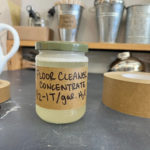
You could also make your own cleaners with simple ingredients like baking soda! 

Spend the month being conscious of your cleaning habits. Looking for an advanced challenge? See how many days you can go without a paper towel.


5.
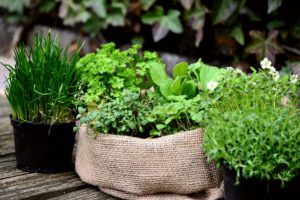
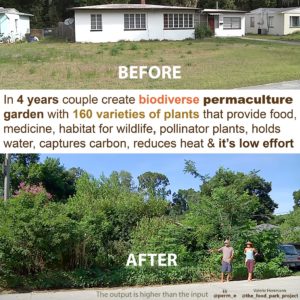
Plant a Garden

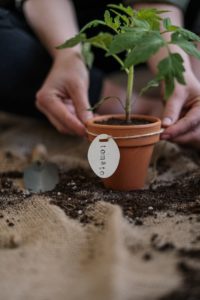
Or just a few containers! Even if all you try this year is a couple herbs in your kitchen window, it counts. 

Growing our own food (and buying local) is a wonderful way to embrace sustainability. Plus it’s super rewarding. 

The Repurpose Project in Gainesville has tons of pots you can get for next to no dollars. 

Looking for easy starter plants? Try corn, cucumbers, squash or zucchini.


6.
Going Meatless

You probably know that our modernized animal agriculture systems are damaging to our environment, but it can be really tough for people to give up meat. Don’t worry, I get it. I encourage you to give it a shot anyway because both the health AND environmental benefits are worth the effort.

7 things that happen when you stop eating meat.

Some tips:

      • Get fresh fruits and seasonal veggies (without all the excess packing!) when you shop at a local farmer’s market.
      • Use the googles for recipe inspiration and give some cooking a go. It can be relaxing and somewhat therapeutic.
      • Feeling short on time or too tired to think about cooking when you get off work? Look out for future you with some day-off meal prepping
how to store produce without plastic – zero waste chef


Try challenging a friend or family member and see who can sustain a vegetarian or vegan lifestyle the longest. Or take a baby step and see if you can do #MeatlessMonday every week this month.

One of my favorite and EASY meals with minimal dishes is a stuffed baked potato with a mixed green, vinaigrette dressed salad. Ideas for stuffings: roasted veggies (my go-to is broccoli and mushrooms), spinach and cheese, classic butter and sour cream, or peppers and onions with plant-based sausage. 


7.
Volunteer for a Green Cause

Your challenge during this month is to sign up for an eco-friendly event like a creek or beach clean up, or planting trees with the Arbor Day Foundation. Bonus points if you bring a friend!

Some Gainesville Orgs that could use your help:

If you’re not able to commit to volunteering in person, consider making a donation if you are able. 


8.
Travel Trashless

Another seemingly difficult place to reduce single-use plastics is when we travel. I don’t just mean vacations or work trips. Even our daily commute to work is often fraught with coffee shop stops and midday snacks.

Challenge yourself to see how many days in a row you can go without accepting or using takeaway disposables and single-use plastics.

Also, be sure to say out loud, every time, at restaurants, coffee shops, cafes, and markets: “Thanks but I don’t need a bag, straws, napkins, cutlery, condiments, lids, etc.” Of course don’t list all of that at a grocery store, just what’s applicable. They’ll sometimes forget and still give it to you, keep saying it anyway! Normalize asking for exactly what you need instead of taking disposables you just toss in the trash 5 minutes later. 

Pro tip: Keep a reusable water bottle, thermos, and set of silverware in the car. Bring your own lunch and homemade snacks. And for mastery level: take a set of clean tupperware with you so you can take home leftovers without a to-go box.


9.
Digital Detox

Don’t think of digital detoxing as eco-friendly? It really is! When you add up all your screen time, you’d be surprised how much energy it consumes. 

Check out your digital wellness app for some stats about your smartphone screen time and see if you can cut it back this month. 

Set a stopwatch when you watch TV and keep a record of it. See if you can cut back a bit each week. 

Bonus: When we reduce our screen time we tend to reconnect with nature. Get outside and touch some grass.


10.
Nurture Your Love of Nature

Sometimes we get so caught up in making our daily lives more eco-friendly, we forget what it’s all about. 

Your challenge this month is to schedule four days that you’re going to do something to celebrate the natural world around us. Whether it’s a day trip to the beach, or a picnic in the woods; feeding the ducks, or the seagulls; laying in your front yard and watching the sky or dancing in the rain – take a conscious moment to remember why we’re doing all this. Really feel your connection to mother nature. Again, bring your friends or family and spread the love.


11.
Trim your Transportation

Take a moment this month to look at your transportation. If you drive to work, are there days you could telework instead? What about finding a carpool buddy? 

Do those old bikes in the garage still work? What if you cycle to a nearby restaurant or park for your next date night? 

When possible, take public transportation instead of driving separately. And if you’re taking a longer trip, drive rather than fly whenever you can!

See what you can do to keep your comings and goings green this year.


12.  Share Your Journey

We don’t often think about social media as an eco-friendly act. In fact, in a lot of ways social media contributes to our consumer-driven downfalls. 

But when used for good, social persuasion is a powerful thing. We are most influenced by those we trust and respect, so when we see something posted by a friend, it affects us more. 

Your challenge this month is to post one day/week about a sustainability win you’ve had this year. Whether it’s a product that’s changed your life and habits, or the basket of veggies you grew in your garden – let’s hear about it! 

And don’t forget to tag us at @unplasticgnv. We want to celebrate with you!


Celebrate Your Successes

Adopting sweeping life changes overnight is impractical and unlikely to stick. It’s overwhelming and unnatural. 

The best thing we can do for the planet is whatever works within our own lives. If you try these 12 sustainable challenges in 2022 I will be greatly surprised if you don’t find something that brings you joy. 

Maybe you discover you love carpooling with your new coworker, or you find community with the wildlife volunteers. Or you discover that it gives you deep satisfaction to tell the waiter “No thanks, I don’t need a to-go box” as you pull out your reusable tupperware. 

Whatever works for you, it all contributes to the greater cause. Here’s to a greener 2022!

Sustainable Gifts – DIY Edition

Well, here we are – the Holiday Season is in full swing.

I know how chaotic it can feel and truly wish for you to have an opportunity to slow down and have some fun with it this year.

Making little handmade gifts is one of a few ways I can really tap into the holiday spirit (see also: driving around to see twinkly lights, my mom’s chocolate chip cookies, and Die Hard).  

I’ve made a lot of different things over the years, but really don’t consider myself very “crafty”. So if I can do it, you can do it. I do try to add an extra personal touch by sharing a holiday family tradition or recreating something I’ve experienced throughout the year. Ideally I can incorporate supplies I already have on hand.

Did an idea just pop in your mind? Go with it! 

If the ideas aren’t coming easy, read on for some inspiration. Everything can be accomplished in an afternoon and there’s lots of room for improvising the components with items you may already have on hand, whether you’re the creative type or not. And remember, if you get stuck – google is your friend. 

Share the Self Care

Candles:

Making your own candles is low waste and eco-friendly and guaranteed to be as non-toxic as the ingredients you use to make them.

Funny novelty mug candles would make a great White Elephant or Secret Santa gift!

The vessels you choose can turn these candles into true works of art. Repurpose a .50 thrift store coffee mug, vintage tea cup, or mason jar.  Or maybe you have those little glass yogurt cups or old tea tins laying around. Hm! 

If you prefer to go jarless, you can make small wax melts using a silicone ice cube tray. 

Fancy up the tops of your candles or melts with some herbs, flowers, or dried fruits!

Why should you avoid paraffin wax? It is derived from petroleum and full of toxic chemicals such as toluene and benzene which is released into the air when you burn them.

I strongly suggest using either raw beeswax or soy wax for something sustainable and safe to inhale.

Ingredients: 

  • Vessel(s) – up to 24oz of volume 
  • Cotton or Wood wicks* (as many as you need for your number of vessels) 

*The wood wicks have a crackling feature for that extra *ambiance*. 

**Beeswax candles naturally smell a little like honey, but you can use essential oils if you want to add some fragrance. If you’re going to do this, I recommend adding a bit of coconut oil since beeswax doesn’t seem to hold onto the scent quite as well.

Directions:

Melt the wax and oil in a double boiler, then add the essential oils. Place the wicks in the jars and pour the mixture in, being sure to secure the wick with a clip (or tape to a pen) so that it holds in the middle while the candle cools. 

Check out this video for a quick tutorial: 


Body Butter:

Body butter is easy to make while also ultra moisturizing and luxurious. This recipe has ingredients you can find by the ounce at Life Unplastic, but could of course altered based on what you might have on hand. 

Ingredients: 

Directions:

If you plan to use arrowroot powder, soften the coconut oil and mix the powder in. Then use a double boiler to melt the butters. 

Remove from heat and mix the butter with the coconut oil. Refrigerate the mixture until it firms up a bit, then add the essential oils and “whip” the mixture with a fork or a standing mixer. Add it to your jars and store with the lid on at room temperature. 

It will keep like this for 6 months or more, though I recommend always using clean hands when you scoop it out. 

(Recipe adapted from: https://livesimply.me/how-to-make-easy-body-butter/)


Bath Bombs:

Most people don’t have bath bomb molds lying around and that’s OK. Look around and see what you have! You can make bath bombs into all kinds of shapes by using molds such as muffin tins (metal or silicone) and cookie cutters. And why make them traditional when they can be quirky and unique? 

Their natural color is classic and elegant, but you can add different coloring agents. It’s important to be careful what dye you select, since if it’s not water soluble it will actually stain your tub (or the tub of the person you give it to! 😬) 

This recipe yields 10 large bath bombs, so feel free to half it or adjust as needed. Again, almost all of these items may already be on hand in your home or can be purchased by the ounce at the shop.

Ingredients: 

  • 2 Tbsp Water
  • 2 Tbsp Dried Orange Peel (optional)
  • Make your own dried orange peel by zesting several oranges (3-6) and sprinkle it out on a tray to dry for 48 hours. 

The orange peel is optional, but it adds a nice natural color and helps soften and exfoliate your skin. Plus it has anti-inflammatory properties! 

Directions:

Whisk together the cornstarch, citric acid, epsom salt, dried orange peel, and baking soda in a large bowl. In a separate bowl, mix the melted coconut oil, water, and essential oils (if using).

Very slowly add the oil mixture to the dry ingredients, stirring and mashing as you go. The end result should be similar to wet sand. Pack the mixture into your selected molds and allow to dry for at least 30 minutes (and up to 24 hours) before removing the mold. 


Whip Up Delicious Consumable Concoctions 

Ok here’s where your family traditions could shine or be adventurous and try something new, it’s all in the experience. Here’s some ideas to get you started: 

Note: You could of course focus on what you have on hand first. I also carry a bunch of pantry staples by the ounce that will fill any gaps for a multitude of tasty, thoughtful gifts. There are so many options it’s difficult to list all the exact recipes. 

**All of these consumables are great to package in clear jars with a little twine or reused bow to give as a gift. 

Candied Nuts:

Mix brown sugar (or raw sugar) with spices like cinnamon, nutmeg, and a pinch of cayenne pepper if you like a little spice with your sweet. Add a splash of water and vanilla extract. Melt the mixture, stir in the nuts, then spread and cool them on a baking sheet before breaking them up and transferring to a container. 

Cookies or Cake in a Jar:

Just mix together the dry ingredients for your favorite cookie or cake mix, then tie the instructions to the jar! We carry gluten free flour, raw sugar, and oats. 

Good Soup: 

Perfect for literally anyone who loves to cook for their family. Grab your favorite chili or soup recipe and layer the dried ingredients like beans and spices in a jar. You can even add our vegan powdered broth mix. Write out and attach the instructions for the other steps, like sauteing diced veggies, adding a can of tomatoes or broth, then dumping the jar in a pot and letting it stew.

An alternative soup idea is this 13 bean fiesta soup mix. Simple and looks beautiful in a jar. Add cajun seasonings for a kick!

Put Together a Personalized Plastic-Free Gift Basket

And finally, as I look around the store it’s hard not to see all the different ways you could combine our environmentally friendly products to make tailored gifts for your friends and family. They are maybe not “DIY” in the traditional sense, but still very thoughtful and a great way to show you care. 

For the coffee enthusiast:

Grab some locally-roasted coffee and pair it with a CoffeeSock and a locally made holiday scented candle.

One variety we are carrying is called ‘A Love Letter to Gainesville’ and proceeds support a program helping to eliminate food insecurity for local students. 

For the homebody:

Make up a batch of super easy room freshening spray with just water, witch hazel, and essential oils! Lavender is great for relaxing a space and Lemon is refreshing and rejuvenating. We have colored glass or aluminum spray bottles so your gift is plastic-free, refillable, and non-toxic. 

Pair it with these handy recycled cotton tea towels and a whimsical animal tree ornament

For the ‘buzzy’ bee:

Local honey, beeswax food wraps, candles, and these silicone reusable bags make a cute bee-themed collection. You can even wrap it all up in this Honey Chemistry Tote bag

For the zero waste beginner:

Foldable stainless cutlery set, bamboo toothbrush, and string grocery bag are just a few options for a starter kit that just makes sense. Other must haves: washable and reusable kitchen sponges, dishsoap block, Happy Willow shampoo bar, cotton produce bags. 

Sustainable DIY Gifts Have Never Been Easier

So you see, there are many ways to put together eco-friendly gifts that won’t end up clogging our landfills and really show you care… about your people, and your planet

If you don’t have time for a visit, remember that shop items can be delivered within the Gainesville area. Order online or give us a call today. 

Visit us at:

2441 NW 43rd St.
Ste 24B-1
Gainesville, FL 32606
📞 352.225.3116


Going Green for the Holidays

‘Tis the Season for Another Eco-Chat

I don’t know much about the infamous White Christmas, living in North Central Florida most of my life, but these days I’m dreaming of something a little more… green. 

Y’all loved the Halloween Howliday Guide so I thought we’d bring it back for a chat about how to have a greener giving season. Considering its reputation for being a consumer-centric eco-disaster, it’s surprisingly easy to be more sustainable during the holidays. I used to really worry about gifting and receiving gifts, but once you establish some ground rules, with yourself as well as your friends and family, you’ll see how fun it is to be in full holiday-swing, without all the pollution and waste.  

Reusing what you already have is always the most eco-friendly option and the most sustainable gift is the one you don’t buy, HOWEVER, a Zero Waste Lifestyle does not have to be restricting and giftless. We don’t have to be a bunch of Scrooges. We just need to embrace consumables, natural materials, and edit everything that doesn’t meet our expectations. 

I’ll break it down a bit so you can reduce waste in all areas of the holidays. 


Environmentally-Friendly Holiday Decorations

You’ve probably heard of popcorn garland and pinecone ornaments, but with a little creativity you can create some beautiful holiday decorations out of natural materials.

The first thing you’ll want to do is head out and collect materials. If you live in an area with woods this can be as simple as going for a walk! Keep an eye out for: 

  • Pine boughs/branches
  • Pinecones
  • Dry grass stalks (especially ones with little seed tufts on the ends) or cattails 
  • Winter berries
  • Seedpods 
  • Twigs and branches of various sizes
  • Nuts
  • Flowers for drying

Then you can supplement those materials with items you’ll find at local farms, supermarkets, on your Buy Nothing Group, at thrift or crafting stores. Consider: 

  • Oranges, cranberries, pomegranates, or dried fruit
  • Nuts in the shell
  • Cinnamon sticks
  • Dried herbs or flowers
  • Feathers
  • Natural cotton
  • Burlap, muslin fabric, jute twice, or raffia ribbon

If you plan on going to a roadside stand or tree farm ask if you can take home some of the leftover boughs – people often leave branches at the base of the tree if it’s a bit too tall or just a tad unruly at the bottom. Most places won’t charge you for this and they’re highly versatile in your holiday decor. 

Wreaths

Natural wreaths have such a classic holiday feel to them, plus the smell of pine as you come in the door is sure to lift your spirits. 

While you can make them completely compostable and from scratch with some greener branches, you can also purchase a metal frame and reuse it year after year. Grab some twine and simply tie the sticks and boughs around the frame, then add your accent pieces. 

Try cinnamon sticks or dried oranges for some more fragrance, or dried flowers and berries for extra color. Feathers, pinecones, seed pods and dried grasses add various textures and colors as well. 

I recently saw this wonderfully whimsical wreath, made from repurposed toilet paper rolls, of all things. But everything Emily Ehlers does is amazing, go follow her insta!

Mantles, railings, and entryways

This is where those spare boughs come in handy. Laying them across a mantle or bookshelf, wrapping along a railing, or framing a doorway with pine boughs brings the joy of Christmas throughout your house – so it’s not just in the room with your tree. 

Try laying out bowls of nuts in the shell, pinecones, pomegranates and red and green apples to get in the natural holiday spirit. 

Wine corks also make fun decorations and can be crafted into everything from Christmas trees and snowmen to these cute little reindeer figurines

The Tree

As far as decorating a tree, consider some of those natural decorations we’ve already talked about. Make garland with cranberries, popcorn, or wine corks. Try ornaments with pinecones, dried orange slices, and bundles of cinnamon sticks. 

You can also find recipes online for sugar cookies and gingerbread that can be made into ornaments, which is a great activity for both adults and kids. 

If it’s time to buy a new strand of lights, consider LED as they are more eco-friendly. 

Sustainability showdown: Is it more eco-friendly to get a real Christmas tree or a fake?

Christmas trees come in all shapes, sizes, and materials. Overwhelmingly, there are just two normalized choices, and there is a debate in the sustainability community about which is more eco-friendly: getting a real tree or a fake? 

The arguments go something like this: Cutting down a real tree sounds bad in theory – don’t we always want more trees? But it’s in the interest of Christmas tree farms to replant, the growing trees absorb lots of CO2, and that land may not be suitable for much else. Plus if a tree is composted, it releases very little carbon back into the atmosphere. 

The main argument for a fake tree is that you can reuse it year after year, and it doesn’t involve cutting down a new tree each time. But they are made from all sorts of synthetic materials including plastics, so the ultimate ecological cost of manufacturing and eventually disposing of a fake tree is fairly high. 

The winner? Honestly, whichever one is right for you. In the grand scheme of the holidays, whether you go with a real or fake Christmas tree is not going to make or break your carbon footprint. We need to hold corporations accountable for their emissions and target whole industries like fast fashion. Then we can worry about our Christmas trees. 

Ultimately the idea here shouldn’t be that one is right or wrong, but how you go about it. If a fake tree is right for you, try to reuse it for as long as you can and try to keep it out of the landfill. If you go the route of real trees, buy local and compost it when you’re done.


Sustainable Gifting Ideas

It is the season of giving after all! And while I think the real power of the season is in spending quality time with loved ones, there’s nothing quite like the delight of a friend or family member opening a gift they love. 

There are plenty of ways to be sustainable with your gifts. So as you run through your list this year consider some of these options: 

Tree-Friendly Holiday Cards

Thoughtful Human makes beautiful cards with tree-free, plantable seed paper that grows wildflowers. It’s an interactive gift that will bring joy now and again when the flowers bloom. 

Or go digital! While it may not have the same feel as receiving a card in the mail, you can now make it super personal with a video message. Plus adding GIFs and memes can make them highly entertaining and bring the holiday cheer to your loved ones. 

Zero-Waste Gift Wrapping

Save the brown paper that comes in your online purchases and use it to wrap gifts!

**Local tip: I have a TON of brown shipping paper I’ve been saving all year that you can grab for wrapping next time you stop by the shop!  It’s a little crinkled, but I think it adds to the charm. 

Tie them up with twine or ribbon and add some snowflakes or christmas trees with a marker or stamp. These come out with a classically rustic look that people always love

If you want something a bit more colorful and funky (especially for the kids) consider what you have lying unused around the house: old maps, comic books, newspaper and magazines make for great wrapping paper. 

Try yarn or twine instead of ribbon, or make the wrapping part of the gift by using something like a thrifted silk scarf or cloth napkins. You can use an old brooch to pin it all together.

I have also seen various sized reusable fabric wrapping bags. You can make your own with any fabric or even get away with an old pillowcase when push comes to shove. 

And of course – if you don’t already – save any gift bags, bows, or ribbons you receive this year to reuse for your gifts next year. (I actually save tissue paper too, but that’s just me, lol.) 


Our Sustainable Gift Guide

As a conscious consumer I’m sure you’ve heard many of the classics: DIY candles or soaps; baked goods; candied nuts; experiences such as tickets to a show or play, art or cooking class. 

But some of us aren’t that creative, or simply don’t have the time to invest in DIY gifts. If you love the feeling of stuffing a stocking, or handing a heartfelt gift to a friend and watching their face as they open it – we have put together our list of favorites from Life Unplastic so you can give gifts you trust are not negatively impacting the planet. Consumable gifts and gifts made from natural materials top our lists. 

For the men: Florida-made beard balm, lava pumice stone, or a rosewood beard comb

For the femme: tassel hoop earrings, this jade facial roller, or these adorable wood animal magnets

For the kids: 100% recycled crazy crayons, this plant-based finger paint kit, or this honeycomb candle making kit

For the student: decomposition books and/or a fancy, zero waste highlighter pencil

For that on-the-go friend: collapsible straw with keychain case or locally roasted coffee beans (by the ounce, so a great opportunity to package in a fun, thrifted jar!)

For your out of town family: these “someone in Florida loves you” ornaments or magnets

For the tricky-to-buy-for: a 30hr outdoor candle, organic seasoning blends, or a pound of local orange blossom honey 

For self care: beautiful holiday themed locally-made soaps, locally-made body butter, or this pot of gold

For a White Elephant/Gag party gift: people will go nuts over these wood britney or dolly face ornaments

For your best bud (pooch or kitteh): treats, treats, and more treats!

For advent calendar, festival of lights, or stocking stuffers: a vitamin-rich lip balm, these travel size shampoo bars, an exfoliating woven soap bag, or a washable/reusable bamboo spork 

For anyone: cute swedish dishcloths, a gallon-sized silicone storage (freezer) bag, or these versatile string grocery bags 

When in serious doubt, a Gift Card can still be presented in a really thoughtful way.  

Remember too, if you’re ordering from us or elsewhere online, order early – experts predict the shipping delays may be even worse than last year. 

Hopefully this gets you in the holiday spirit and feeling like it’s going to be a very green Hanukkah, Christmas, or whatever you are celebrating this time of year.